Everglades
by Denise Wauters
Anyone who has spent time out on the water around Everglades City over the last ten or twenty years has probably noticed something. The places look the same at first. The islands are still green. The light still hits the water the same way late in the afternoon. But the closer you look, the more you see that things are not what they used to be.
The grass flats are quieter than they were. The oyster bars in the river mouths are mostly gone. Channels we used to be able to run are choked off by mangroves. And the fishing, as anyone who has been fishing these waters for a while will tell you, is not what it once was.
The local captains who work these waters every day have been pointing all of this out for some time now. They are the ones who notice first because they are the ones out there first.
The Grass Flats Are Different
The biggest change, and the one that took the longest to register for a lot of people, is the loss of seagrass. What we have always called turtle grass used to cover huge stretches of the inside waters between Everglades City and Lostmans River. It was the food base for the entire fishery. Without it, juvenile snapper, grouper, shrimp, pinfish, and seatrout do not have what they need.
Capt. Mike Merritt, who has run these waters for more than fifty years, has been raising this for a while. In his December fishing report he wrote that the lack of grasses is the main factor he sees behind the slow decline of our fishery. The Spartina that used to grow along the shorelines is in the same kind of shape. There is an area south of the islands called Rabbit Key Grasses, named for the shore grass that used to grow there. He says only one small patch of it is left.
Fewer Oysters at the River Mouths
The oyster bars tell the same story. The river mouths around here used to hold a maze of them, filtering the water on every tide and helping keep the estuary clean. Most of those bars are sand and broken shell now. Living oysters are still hanging on along the edges of some of the islands, but the rich, steady oyster beds the old-timers talk about are mostly memory. The captains estimate roughly three-quarters of our oysters are gone.
The Mangroves Keep Moving North
The change that is easiest for almost any of us to see is the mangroves. You can watch it happening from the Tamiami Trail. The old canal that used to run wide open along U.S. 41 is almost completely closed off now. Mangroves came in along the edges, took root, and built up ground year by year until what was open water became a green wall.
The same thing is happening across the backcountry. Areas that used to be open grass prairies are now mangrove islands. Some channels have closed off entirely. The captains who have been watching the longest say the mangroves have marched roughly fifteen miles inland over the decades. That kind of shift changes how water moves through this whole system. Where flow used to spread across a wide area, it now gets funneled into narrow paths or stopped altogether.
The Fishery Tells the Story
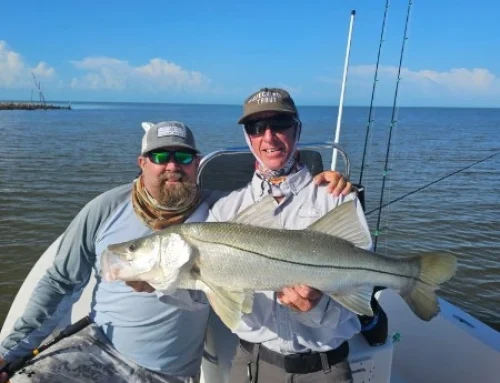
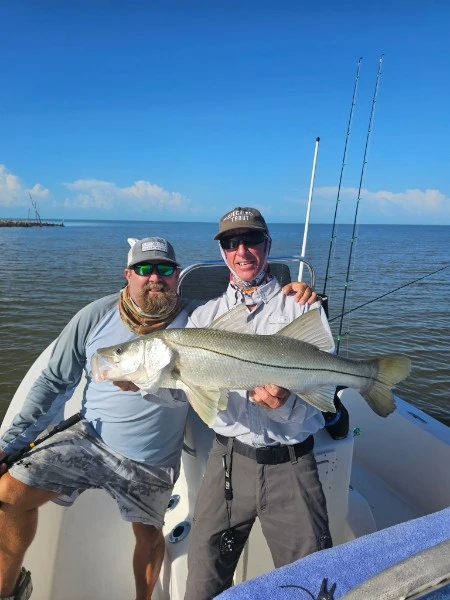
If anyone wants the simplest measure of how much has changed, it is the fishing. Days that used to produce fifty to seventy-five snook now produce eight to ten. Trout catches that ran into the hundreds on the inside flats have dropped to almost nothing in those same waters. Whole stretches that used to give up small grouper and snapper as a matter of course do not anymore.
A Place Worth Watching Closely
None of us has all the answers about why this is happening or what can be done. But it does seem clear that the southern end of the Everglades is changing in ways a visitor on the boardwalk will never see, because most of it is below the waterline, or hidden behind the green of a mangrove island.
The people who know this place best have been paying close attention for years. The rest of us are starting to, as well.
You may also be interested in Winter Fishing in The Everglades 10,000 Islands or Court Rules in Favor of EAA Reservoir.