by Denise Wauters
If you’ve ever wondered how the Everglades became what it is today — or why its future matters so much — there’s a new video series worth your time.
Friends of the Everglades has released The Everglades Story, a short-form educational video series hosted by environmental advocate and storyteller Michael Williams. The series breaks down the Everglades’ past, present, and future in a way that’s easy to follow and rooted in real history.
This isn’t a lecture series or a deep scientific dive. It’s storytelling — the kind that helps people understand how water, land, people, and decisions are all connected.
A Big Story Told Simply
The Everglades is often described as a river of grass, but that phrase barely scratches the surface. In this series, Williams walks viewers through how the ecosystem once functioned naturally, how it was altered over time, and why restoration matters today.
Each episode builds on the last, creating a narrative that’s easy to follow even if you’ve never studied the Everglades before. It’s designed for everyday people — students, visitors, residents, and anyone curious about South Florida’s most iconic landscape.
Why This Matters Here
For communities across the Ten Thousand Islands and inland areas tied to Everglades water flow, this story isn’t abstract. It explains why flooding happens where it does, why water quality matters downstream, and how choices made decades ago still shape life here today.
That context is especially important for younger audiences and newcomers who may love the Everglades but don’t yet understand how fragile — and engineered — it really is.
A Resource Worth Sharing
Because the episodes are short and accessible, The Everglades Story works well as a classroom resource, a conversation starter, or a refresher for anyone who wants to better understand the place they live in or love to visit.
If you care about the Everglades — whether as a resident, a visitor, or someone raising the next generation here — this series is well worth watching.
You can explore the full series on Friends of the Everglades’ website.
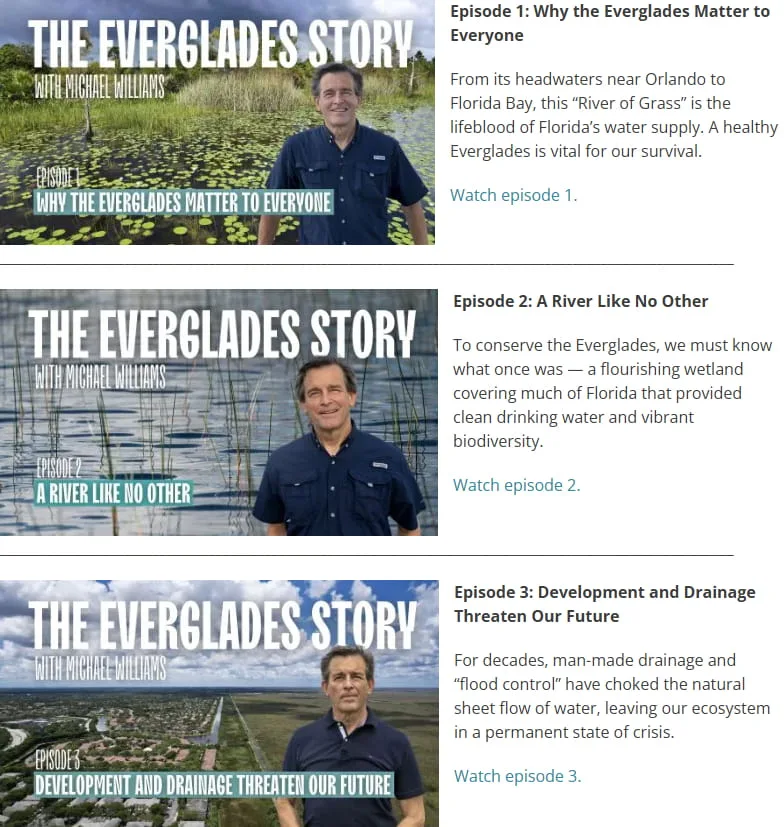
The Everglades Story With Michael Williams
Courtesy of the Friends of the Everglades